ApneaSense · SDK evaluation
Breathing analysis SDK evaluation: what exists today
There is a running acoustic engine inside SomniSense, but no downloadable buyer SDK, public API key or fixed integration schema. Begin by defining your device, recording environment and intended outputs. A scoped pilot can inform whether platform-specific extraction is worth pursuing; it does not guarantee a package or delivery date.
Describe your evaluation scope →Available now
Separate iOS and Android engines in SomniSense use matched models, audio front ends and calibration. Current App output includes acoustic candidate labels, estimated timing and duration, quality handling and reviewable waveform/audio context. They are not represented as one interchangeable binary.
Public preprints and method repositories can be inspected without an inquiry. They explain the research pipeline; they are not an integration kit, trained checkpoint distribution or a release of participant recordings.
Define the pilot before the interface
Capture: hardware, microphone, sample format, distance and placement, room noise, other sleepers and operating limits.
Output: which candidate fields and quality states your interface needs, with an explicit distinction from clinical apnea, hypopnea and AHI.
Evaluation: representative data with appropriate consent, reference criteria where applicable, errors by task, end-to-end latency, memory and power. Agree success criteria before interpreting the result.
Conditional next steps
If evidence supports the use case, discuss the minimum platform-specific interface, artifact format, documentation, support and commercial terms. These are uncommitted choices. A pilot may also show that the use case should change or stop; there is no public price or fixed turnaround promise.
From model output to something a person can inspect
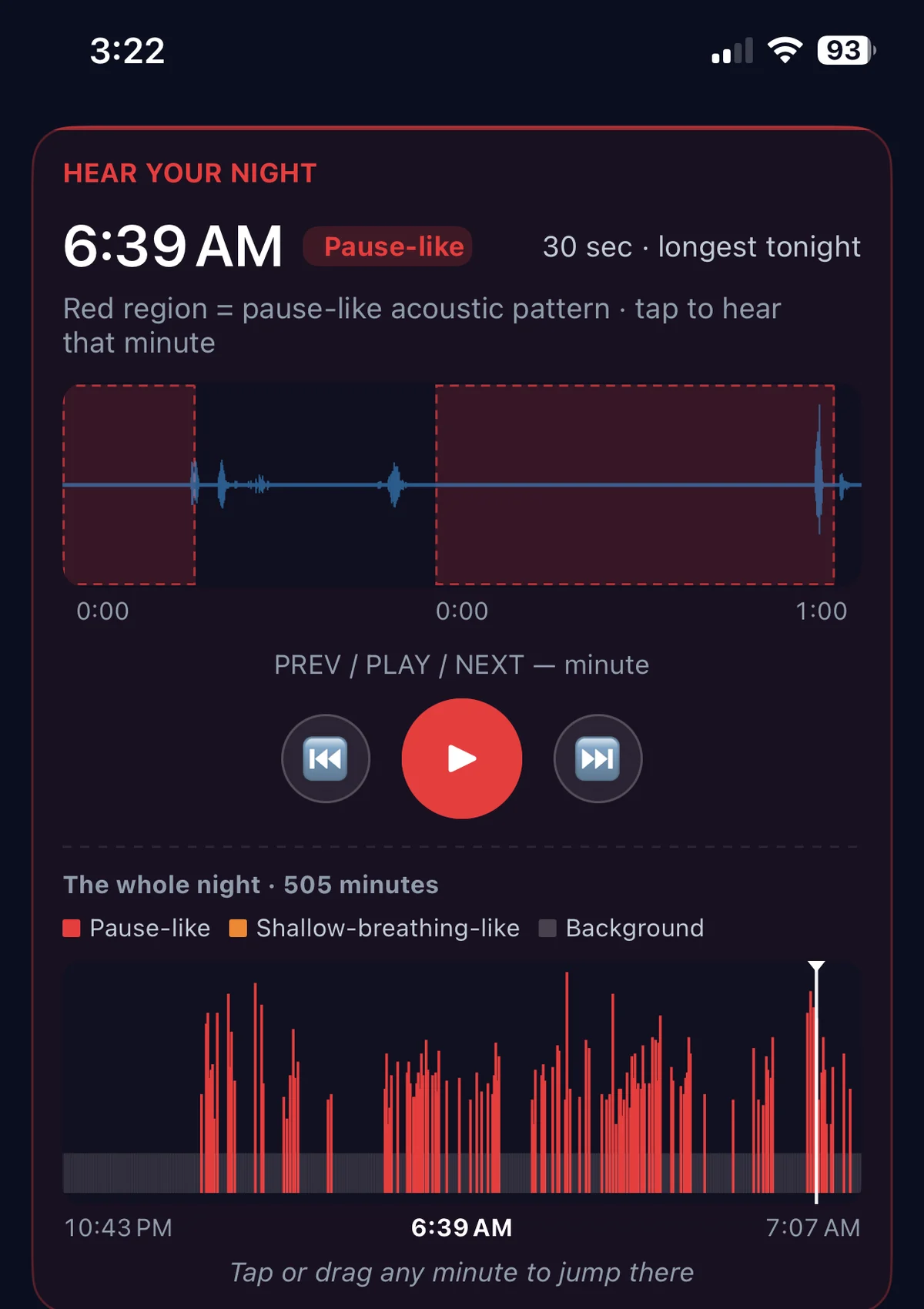
SomniSense connects a candidate to estimated time and duration, a marked waveform, surrounding audio and its place in the night. For a pause-like candidate, review sound before the silent interval and when sound resumes. That product workflow shows how candidate output can be made reviewable. Your microphone, noise conditions and interface still need their own evaluation.
Questions before you proceed
Does the M2 latency apply to our chip?
No. The research measures a stated CoreML forward pass on Apple M2, excluding audio preprocessing and post-processing. Measure the complete pipeline on your hardware before setting a product latency or power claim.
Who determines the regulatory path?
Requirements depend on actual function, intended use, market and claims. They need specific assessment; neither an SDK label nor licensing automatically removes them. Responsibilities require a separate agreement.